Azma Asad
Can you introduce yourself and tell us how your artistic journey began?
My name is Azma Asad (b. 2002), and I am a visual artist based in Sialkot, Punjab, Pakistan. I completed my Bachelor’s degree in Fine Arts from Government College Women University Sialkot (GCWUS) in 2024, with a specialization in Painting. I have showcased my work at established galleries and art platforms across Pakistan, as well as Internationally in London,
New York, Chicago, and Kolkata.
Currently, I am working from my home studio in Sialkot, where I continue to develop my art practice.
My artistic journey began in early childhood, when I developed an interest in art at around four years old. I would finish my schoolwork quickly just so I could draw rainbows and birds. As I grew up, I became interested in the colors and visuals of video games (PlayStation) and started exploring MS Paint and Photoshop. Gradually, I focused more on drawing, practicing regularly and learning from YouTube tutorials. During my teenage years, I developed a strong interest in pursuing Fine Arts. This eventually led me to study Fine Arts at Intermediate Level and later earn my Bachelor’s degree in Fine Arts, specialization in Painting.
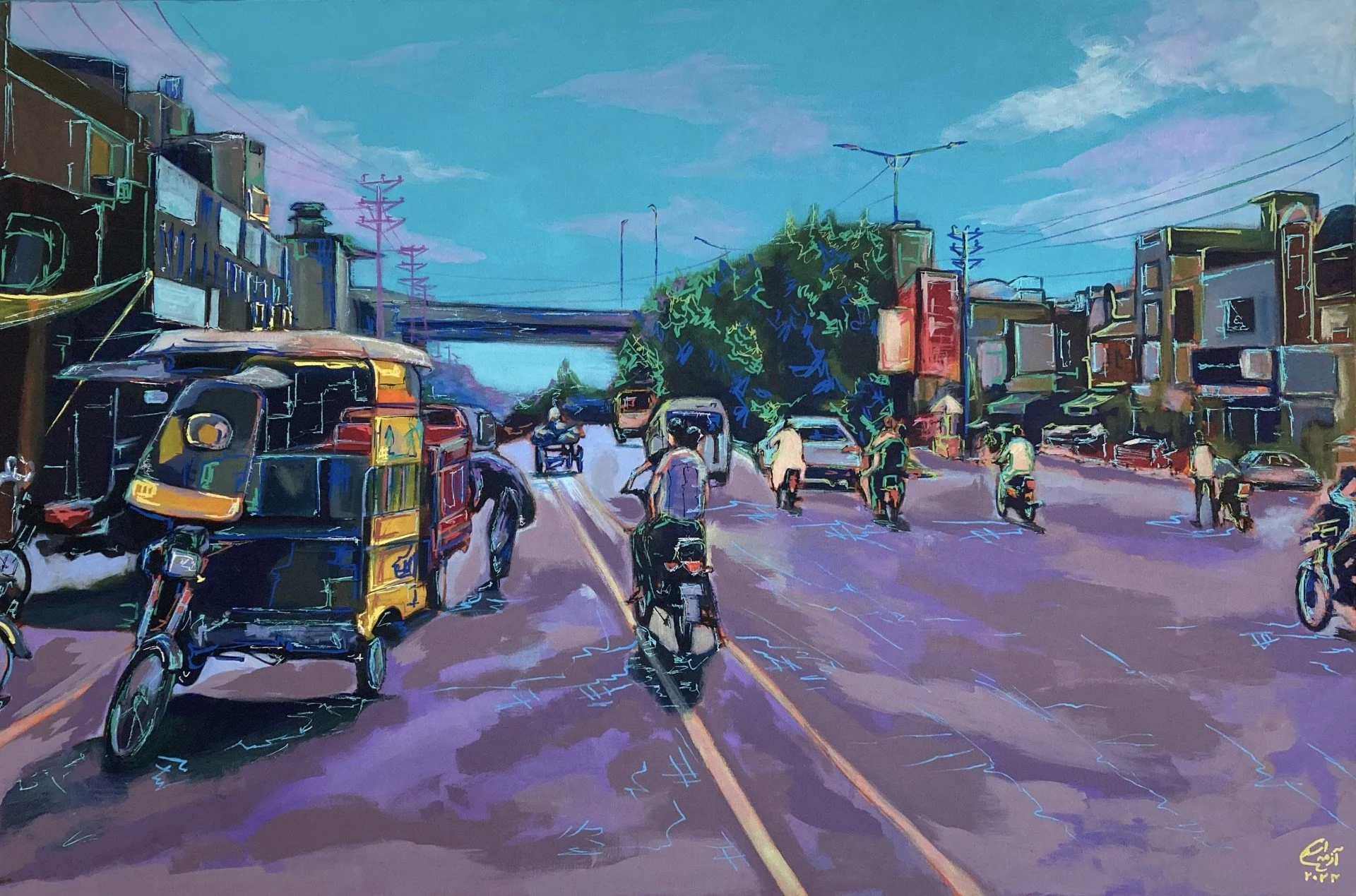
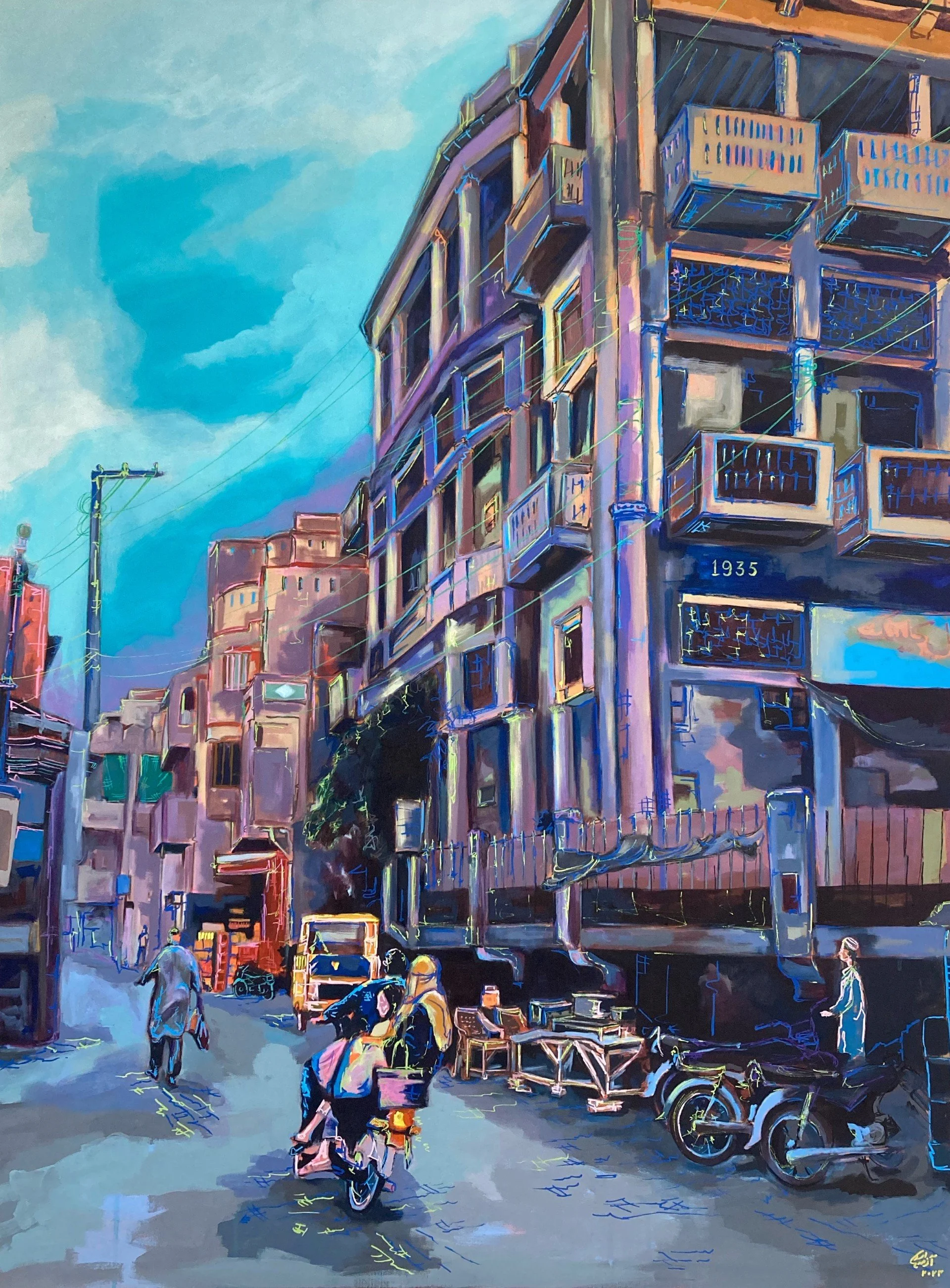
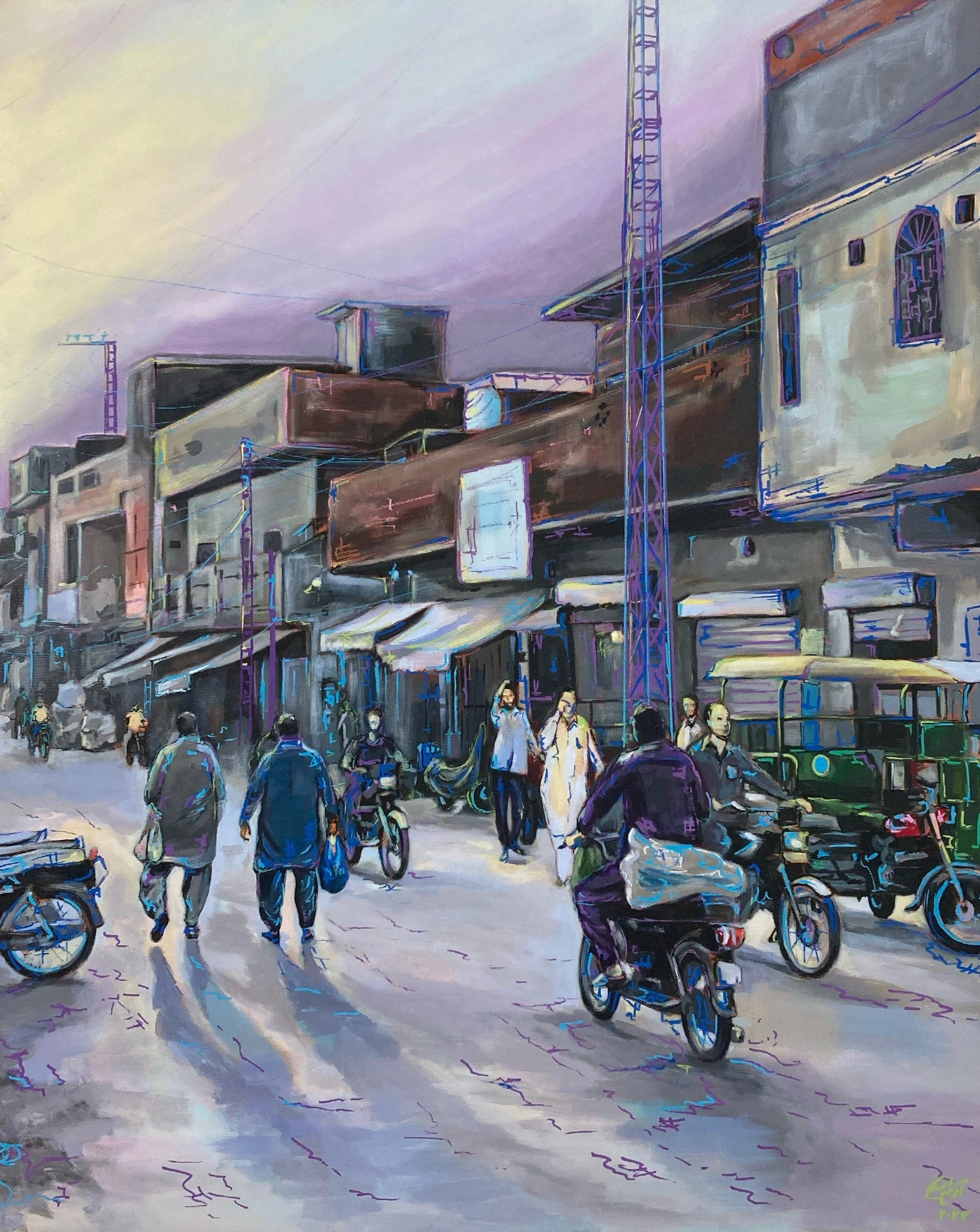
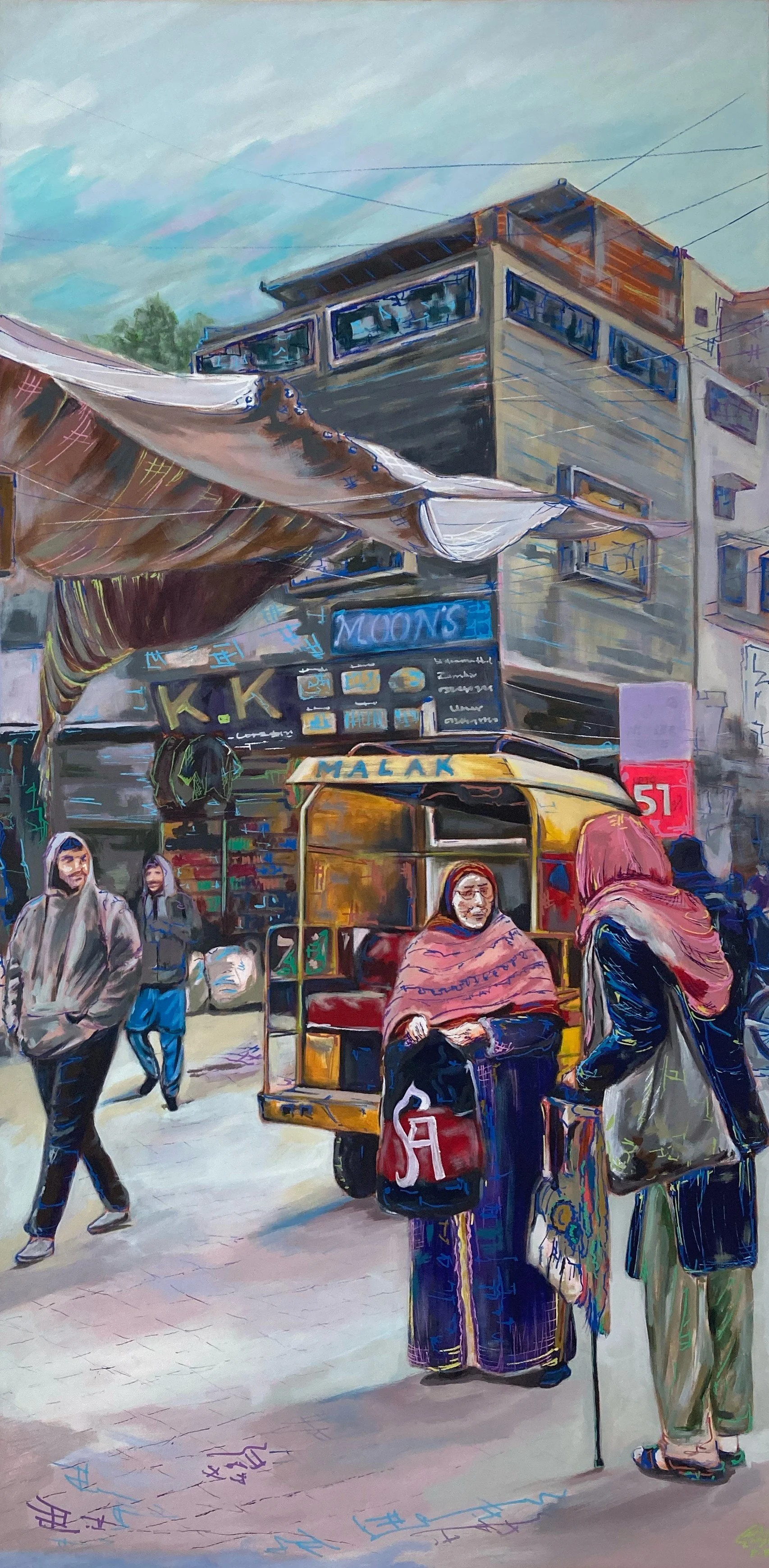
The title of my thesis series was “Shehar Ki Hal Chal.” My thesis focused on Cityscape imagery.
What ideas, experiences or emotions inspire your artwork?
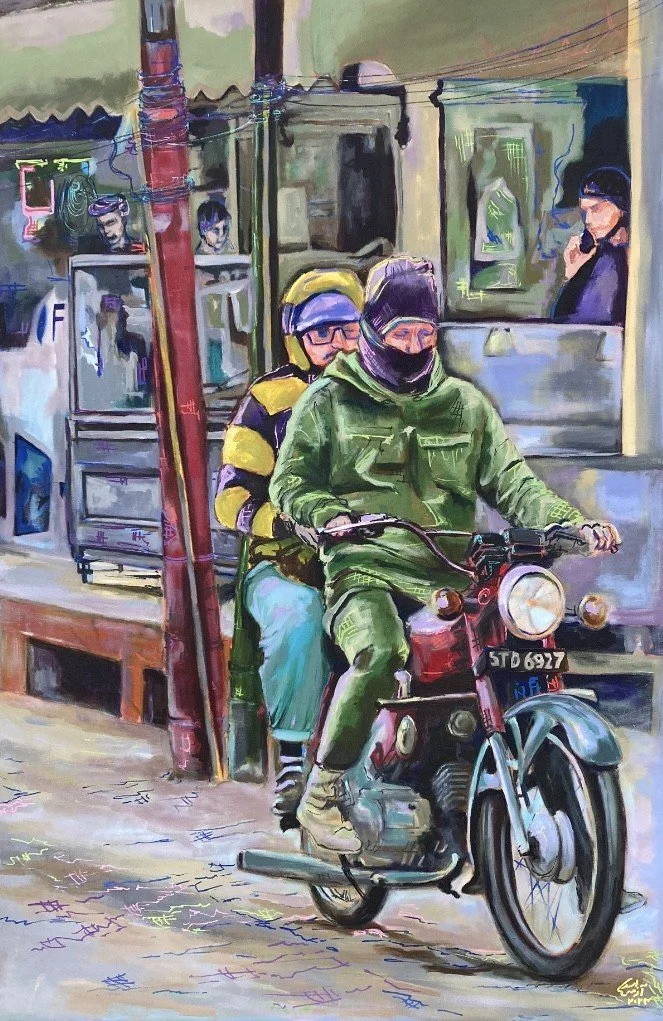
The ideas for my artwork come from observing Sialkot and its vibrant city life. I am inspired by its dynamic energy, bustling environment, vehicle movement, architecture, and the diverse behaviors and interactions of people. These observations help me explore the city’s character and cultural reflections.
My experiences of living in and observing Sialkot have created a personal connection with the city. Its constant movement gives me a sense of energy and liveliness, while quieter moments evoke feelings of solitude and reflection.
My main inspiration is Sialkot itself, along with the influence of digital illustration, which encourages me to view familiar surroundings from a different and unconventional perspective. Through my artwork, I aim to express the city’s energy, atmosphere, and essence.
How would you describe your creative process and the materials you use?
My creative process usually begins with exploring my city, Sialkot. I photograph places, streets, architecture, vehicles, and other details that catch my attention. Then I make quick sketches which help me study the scene and develop the composition for my painting.
During my Bachelor’s, I experimented with different mediums, but oil was my favorite medium at that time. During my thesis practice, I started exploring more mediums and gradually discovered that acrylic suited my way of painting very well. Through this exploration, my style developed strongly with acrylic, and I have continued using it since then.
For my paintings, I prepare the canvas with gesso mixed with water and tone the surface before making the initial drawing. I then begin with base colors to establish the overall composition and gradually develop the details. I mainly use acrylic paint on canvas.
I do not plan every color or step in advance. Once I start applying colors, I allow the process itself to guide me towards the next step. I paint subconsciously and follow my own distinctive and unconventional approach, particularly in my use of color.
Is there one artwork that is especially meaningful to you, and what the story behind it?
Yes, there are a few paintings that are very close to my heart, especially “Shaam Sey Pehly”. I really like its catchy colors, and I painted it with a lot of feeling, so I have a personal connection with it.
Another painting is Guzra Hua Waqt, which has quite an interesting story. I actually struggled with this painting a lot. From the beginning to the middle stage, I found it difficult to take it towards a final form. When my deadline started getting close, I became quite frustrated and began painting much faster because I was already fed up with it. Surprisingly, the painting suddenly came together, and when I reached the final point, I realized that I actually liked it.
For me, the painting eventually became connected with the feeling of nostalgia. Sometimes you pass through a particular street and suddenly a building, road, or familiar view reminds you of old memories. You are simply passing through that place, but suddenly you start feeling connected to those memories again.
It became even more meaningful when I displayed it in my thesis and saw that people really liked it. I also received very good feedback on Instagram and from art galleries.
I like the fact that viewers can also create their own stories from my paintings. I don’t want to explain exactly what someone should feel when they look at my work. I would rather let them experience the cityscape through their own memories, feelings, and perspective. I find people’s different interpretations very interesting.
What are you currently working on, and what do you hope to explore in the future?
At the moment, I’m continuing to explore cityscapes, but I’m trying to look at them from different perspectives. I want to experiment with more interesting compositions and explore how I can arrange the different elements of a city in my own way. Along with composition, I’m also exploring colors further and trying to understand how different color choices can change the mood and energy of a painting.
I feel that I’m still discovering new possibilities within my cityscape practice, and I’m excited to see how these experiments develop into new work. I hope something meaningful and interesting comes out of this process, and that people enjoy seeing it.
@azmaasadart